
The Offseason Isn’t About Doing More — It’s About Doing It Right
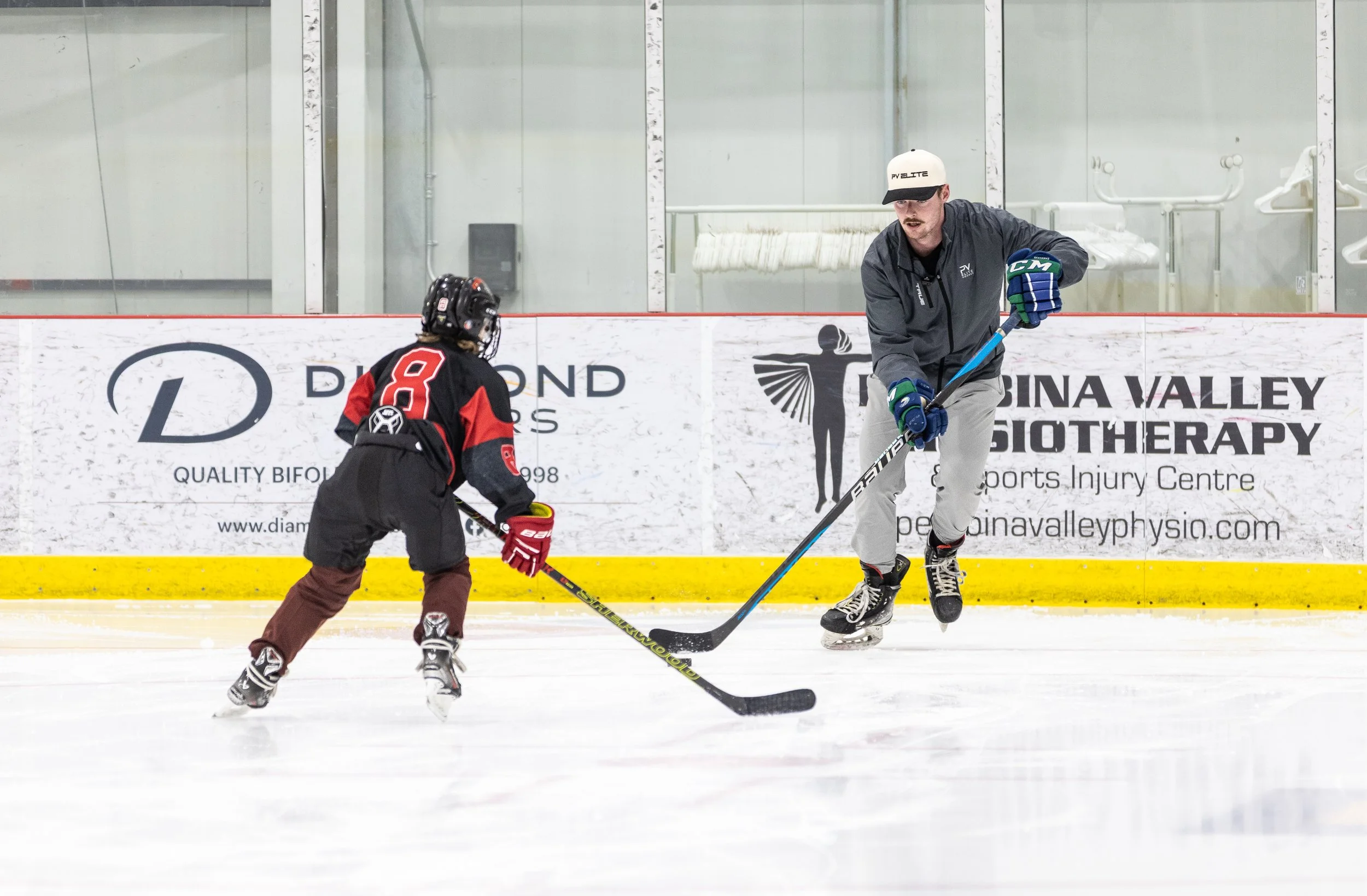
What Parents Should Actually Look For This Offseason
As the season comes to an end, most families shift into planning mode:
What should we do this offseason?
What gives our player the best chance to improve?
It’s an important window. Because the offseason isn’t just time away from games — it’s where a lot of meaningful development happens.
Moving Forward With Intention
The players who take real steps forward each year aren’t just staying active — they’re intentional with how they train. They’re not just going through the motions. They’re working on specific areas of their game, with a clear understanding of why it matters. That clarity is what turns training into progress.
What Actually Moves a Player Forward
If the goal is improvement heading into next season, there are a few things that consistently make the biggest difference.
Purpose Behind the Work
Every session — on the ice or off — should connect back to something.
A skill to improve.
A habit to build.
A part of the game that needs attention.
When players understand what they’re working on, they get more out of every rep.
Quality Repetition
Development comes from repetition — but it’s the right kind of repetition that matters.
Reps with focus.
Reps with attention to detail.
Reps that reinforce good habits.
Over time, those small details add up.
The Coaching Feedback Loop
One of the most overlooked parts of development is the feedback process. Players improve faster when they have:
Clear direction
Immediate feedback
An understanding of what to adjust
It’s not just about doing the work — it’s about knowing whether the work is being done correctly.
The strongest development environments create a constant loop:
Attempt → Feedback → Adjustment → Repeat
Over time, that loop builds awareness, confidence, and real progress.
Challenge and Adaptation
Players need to be placed in situations where they’re pushed. Moments where:
They have to think under pressure
They make mistakes and adjust
They’re forced to execute at a higher level
That’s where development starts to transfer into games.
Consistency Over Time
Improvement doesn’t happen in one session or one week.
It comes from stacking days together.
Consistent effort.
Consistent focus.
Consistent attention to detail.
That’s what creates noticeable change by the time the season returns.
Using the Offseason the Right Way
The offseason gives players something they don’t always have during the year:
Time to focus.
Time to build habits.
Time to improve specific areas of their game.
Time to take a step forward.
The players who use that time well often come back more confident, more capable, and more prepared.
A Simple Way to Think About It
As you move into the offseason, a helpful question to keep in mind is:
“Is this helping my player improve — or just keeping them active?”
When training is intentional, structured, and supported with feedback, that’s when real development starts to happen.
Final Thought
The end of the season is a reset. A chance to reflect on what went well, what can improve, and how to take the next step. The offseason doesn’t need to be complicated. But it should be purposeful. Because what gets built over these next few months has a way of showing up when the next season begins.